
The exact amount and ratio of each peptide may vary between suppliers. A premixed KLOW Blend Peptide contains all four compounds in one co-lyophilized formulation. It is the name used for a blend of four separate research compounds. One formulation receiving more attention is the KLOW peptide blend. It is commonly examined in research settings where combined peptide formulations are studied for their collective behavior, stability, and analytical performance under standardized laboratory conditions.
And research-use compounds are not made to pharmaceutical standards, so a batch-matched certificate of analysis is the only available check on what is actually in the vial. No trial has tested the blend itself; every claim about KLOW is inferred from components studied separately, usually at different doses and routes. KPV 10mg (12.5%) Tripeptide fragment of α-MSH, documented around inflammatory signalling including gut-specific activity.
GHK-Cu makes up the bulk of both blends , 50mg out of 70-80mg total, because it operates at higher absolute doses than the other peptides. An 8-week clinical study showed a 55.8% reduction in wrinkle volume versus control. TB-500 mobilizes your repair cells and helps them move 2 to 3 times faster to injury sites. KPV concentrates itself in the exact tissues where inflammation is worst.
Understanding the Risk Profile

Additional compounds should be evaluated for pathway overlap, duplicated ingredients, and added complexity rather than assumed to improve the blend. Stacking multiple compounds that hit the same receptor or pathway Avoid stacking compounds with identical mechanisms unless specifically planned. Why this matters Continuous use can reduce effectiveness over time. The combined schedule is a research-use framework rather than a clinically validated dosing protocol. Research-use discussions generally use a gradual build over several weeks before transitioning to a lower maintenance phase if continued use is being evaluated.
The compounds in the KLOW blend, consisting of all peptides, have not received FDA approval for usage in humans. Compatible with MOTSc peptide for sale bacteriostatic water solution, both peptides dissolve well in water. Researchers utilizing all four compounds find KLOW to be an appealing choice due to its bundled pricing and combined documentation. Priced at $135 (the KLOW bundle offers considerable savings), though the precise quantities included are important.
The best place to purchase KLOW in 2026.
Reduced joint (tendon and muscle pain is one of the single most reported KLOW effect), often described as arriving faster than anything else, sometimes inside the first week or two. Research and reports converging on the same benefit at the same timescale is the strongest thing this blend has. Dermal collagen remodelling genuinely runs on a scale of weeks to months, so reports clustering at four to eight weeks land where the biology would put them rather than where enthusiasm would. Whether subcutaneous GHK-Cu produces the same dermal effect is untested — so this is the KLOW peptide benefit with the most evidence behind it and still a real inferential gap in the middle. It proves nothing on its own (but consistent independent reporting is a real observation), and pretending otherwise is its own kind of dishonesty. The entire premise of that study is intestinal uptake through a gut transporter.
A total of 80 mg of research material is comprised in each vial — which contains 50 mg of GHK-Cu, 10 mg of BPC-157, 10 mg of TB-500, and 10 mg of KPV. Intended for analytical applications and controlled laboratory research — compounds are provided by Royal Peptides. Exclusive to laboratory research and scientific applications — Royal Peptides products are made available.

A note on results timelines
This website contains educational peptide research content intended for adults only. Reconstitution is the process of adding bacteriostatic water to the freeze-dried (lyophilized) peptide powder in order to prepare it for injection. Combination blends are often used in discussions centered around weight-focused protocols and lifestyle support strategies. Use PeptIQ to log injections and vial supply, use peptiq.io calculators for math on the web, and keep protocols organized. Articles describe research (labels), and regulatory status; they do not recommend doses or tell you what to take.
Estimated Cost
The exact concentration depends on the volume of water used. Reconstitution is the process of adding sterile or bacteriostatic water to the freeze-dried powder to create a measurable liquid. Because KLOW itself has not been tested as a fixed four-peptide blend in controlled human trials, any discussion of « benefits » is really a summary of what each separate component has been studied for in preclinical settings. In one in vitro study, BPC-157 increased the outgrowth and migration of tendon fibroblasts in a dose-dependent manner and up-regulated the growth-hormone receptor in those cells. Some suppliers list different totals or split the four peptides evenly, so the certificate of analysis for a specific vial is the only reliable source for its exact composition.
Dalmasso et al. (2008) conducted a study that revealed a notable decrease in colonic inflammation in a murine model along with enhanced histological scores. Utilize Peptide Assistant (completely free), to log your doses of the KLOW Blend, maintain consistency, and keep an eye on your protocol. After stopping usage, effects usually remain for several weeks. User reports form the basis of this timeline; both the blend and KPV haven’t been tested in human subjects. Hair results come later and require longer protocols. Hair results take weeks minimum due to slow follicle cycles.
Generally (within a few days after the last dose), the peptides are mostly eliminated, which is why an off-period is implemented to help normalize copper levels. There is no safety data that supports continuing use for more than approximately 12 weeks. A typical cycle consists of 4 to 6 weeks of use followed by a break of 2 to 4 weeks. Require precise units for a different size vial or volume of water? Recent posts there provide a more timely and unfiltered perspective compared to any single summary, including this one. The primary venue for live discussions is Reddit’s r/Peptides community, which features a detailed community write-up in the KLOW blend guide thread of r/ParamountPeptide.
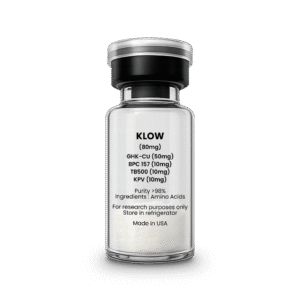
None of the vials reproduce the four-component formula or the specific daily blend dose stated above. An independent study on nanoparticle delivery investigated KPV targeted orally in models of experimental colitis. Moreover, there are no controlled studies that confirm the dosage and frequency reported by the community and displayed in the primary chart.